
Psilocybe cubensis (Earle) Singer
Psilocybe cubensis strain index
Twenty-six names for Psilocybe cubensis, from formal varieties to growers' cultivars, each with its origin, lab data where it exists and what is unknown.
- Updated
- 10 October 2026
- Cards
- 7
Card 01Summary
This index lists 26 names used for Psilocybe cubensis and its closest relative: four formal taxa, thirteen cultivars with a published laboratory measurement, and nine widely sold cultivars without one. Each entry says what the name refers to, what has been measured and what is unknown. All cultivars are lines of one species; the differences between them are smaller and less certain than the number of names suggests.
Card 02Ix.2
How to read an entry
Each entry has the same number and two-letter code as its cell in the table on the home page. The value is the published laboratory figure in milligrams per gram of dried mushroom. Values marked S are psilocybin from the 14-strain study of 2026 (Sharchaton et al.); values marked G are psilocybin plus psilocin from the 5-strain study of 2024 (Goff et al.). The studies used different methods, so G and S values are not strictly comparable. n.d. means no published measurement was found. Descriptions in quotation marks come from the 2025 strain review in the Journal of Fungi, which notes that they are "predominantly sourced from non-academic, community-based reports" (Kurzbaum et al.).
Methods and the full tables are on psilocybin content.
Card 03Ix.3
Formal names
01PcPsilocybe cubensis
The species, described by F. S. Earle in 1906 from Cuba as Stropharia cubensis and moved to Psilocybe by Rolf Singer in Sydowia 2 (dated 1948). Purple-black spores, white ring, blue bruising, grows on dung. Named on List II of the Dutch Opium Act. See name and origin.
02Cyvar. cyanescens
Described by William Murrill in 1941 as Stropharia cyanescens from near Gainesville, Florida, and reduced to a variety of P. cubensis by Singer and Smith in 1958, based on its paler cap. Current databases list it as a synonym of the species.
03Cavar. caerulescens
Described by Narcisse Patouillard in 1907 as Naematoloma caerulescens from Tonkin, in what is now northern Vietnam. Singer and Smith made it a variety in 1958; Singer distinguished it by a more yellowish cap. Now a synonym.
04OcPsilocybe ochraceocentrata
A separate species, described in 2026 from sub-Saharan African collections previously filed as P. cubensis. It is the closest known wild relative; the two last shared an ancestor about 1.5 million years ago. It also grows on the dung of large herbivores (Bradshaw et al., 2026).
Card 04Ix.4
Measured cultivars
05MkMak IND
19.6 mg/g S, the highest psilocybin value in the 14-strain study, with 20.65 mg/g of all tryptamines combined. No origin is given for the name in the study.
06PePenis Envy
15.5 mg/g S, with the highest psilocin value in the study (1.77 mg/g). The review describes it for "exceptional potency and distinct morphological characteristics". The name refers to its shape.
07CrCreeper
13.6 mg/g G, the highest of the five strains in the 2024 study.
08BmBlue Meanie
12.2 mg/g G. "Blue meanies" is also a common name for a different species, Panaeolus cyanescens (Wikipedia); the 2024 study measured a P. cubensis strain.
09ApAlbino Penis Envy
11.4 mg/g S, lower than the pigmented Penis Envy in the same study. A white, leucistic form of the Penis Envy line.
10BpB+
11.3 mg/g G. Described in the review for "resilience and consistent productivity under diverse environmental conditions".
11TyTexas Yellow
11.0 mg/g G. The name points to Texas; we found no documentation of its origin.
12JgJack Frost × Golden Teacher
11.0 mg/g S. A cross between two lines. It is the closest thing to a published measurement for Golden Teacher, which was not tested on its own.
13ThThai
8.8 mg/g G, the lowest of the five strains in the 2024 study. The review nevertheless lists Thai among strains with relatively high content. The name points to Thailand.
14EnEnigma
7.9 mg/g S. Described in the review for "unique, blob-like formations that deviate from typical mushroom shapes".
15JfJack Frost
5.0 mg/g S, with no psilocin detected. The review reports a community reputation for "rapid growth and high potency"; in the 2026 study it was among the lowest.
16ZpZ+
3.2 mg/g S, no psilocin detected.
17OrOak Ridge light
2.0 mg/g S, the lowest value in the 14-strain study and about a tenth of Mak IND.
The 2026 study also measured Sat (13.5), Jedi Mind Fck (11.6), Jack Frost × Shakti (6.8), Xico (6.2), Mal (5.6) and SE Houston (2.3). They are less widely sold and are listed in full on psilocybin content.
Card 05Ix.5
Named after places, not measured
18MzMazatapec
n.d. The name refers to the Mazatec region of Oaxaca, Mexico, and the review links it to the region's spiritual traditions. Whether the culture sold today descends from a collection there is undocumented.
19EcEcuador
n.d. Named after Ecuador. No published account of the founding collection.
20CbCambodian
n.d. Named after Cambodia. The review describes it for "swift colonization and prolific fruiting".
21PaPES Amazonian
n.d. Sold as Amazonian or PES Amazonian. The review describes Amazonian as "sought after for its large, potent mushrooms", a claim no laboratory study has tested.
22HwHawaii
n.d. Named after Hawaii. No published account of its origin.
23TcTreasure Coast
n.d. Named after the Treasure Coast, a stretch of the Atlantic coast of Florida, a state where wild P. cubensis is recorded.
Card 06Ix.6
Trade and trait names, not measured
24GtGolden Teacher
n.d. on its own; measured only as a cross with Jack Frost (entry 12). The review describes it for "vigorous growth and substantial psychotropic effects". It is among the most searched strain names.
25McMcKennaii
n.d. The name recalls Terence McKenna, co-author of a 1970s grower's guide for this species; who gave it and when is undocumented, and no species of that name exists.
26AaAlbino A+
n.d. A white, leucistic form; the review describes its "distinctive white, leucistic fruiting bodies".
Card 07Ix.7
Grow kits sold in the Netherlands
Several of these cultivars are sold as grow kits by Dutch-Smart, a Dutch smartshop. In the Netherlands the kits are legal to sell, and the mushrooms they produce fall under the Opium Act as soon as they appear; outside the Netherlands, kits and spores are often illegal to import or grow. Read legal status first. Only in stock items are shown.
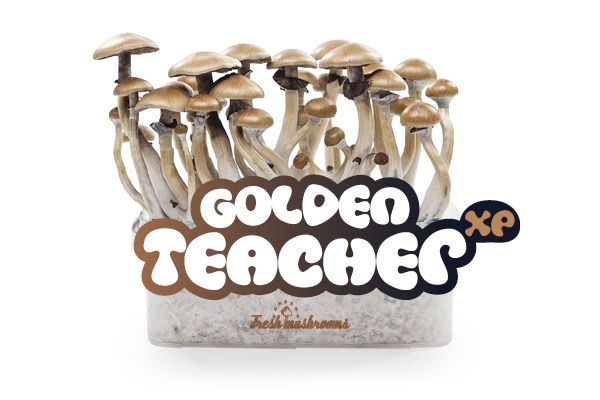 Dutch-Smart · NL
Golden Teacher - FreshMushrooms Magic Mushroom Grow Kit
€39.50
Dutch-Smart · NL
Golden Teacher - FreshMushrooms Magic Mushroom Grow Kit
€39.50
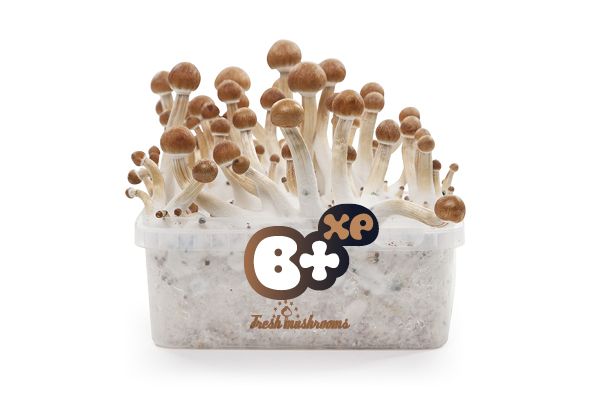 Dutch-Smart · NL
B+ - FreshMushrooms Magic Mushroom Grow Kit
€39.50
Dutch-Smart · NL
B+ - FreshMushrooms Magic Mushroom Grow Kit
€39.50
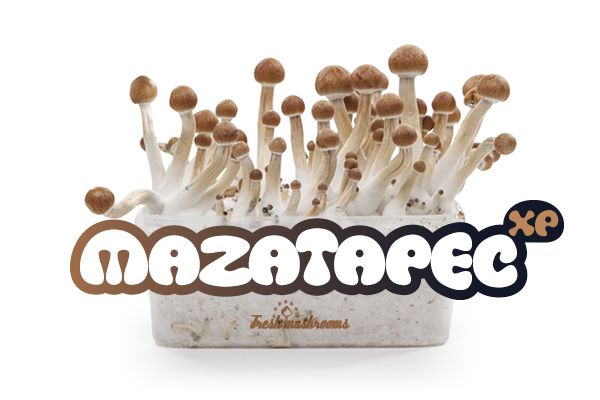 Dutch-Smart · NL
Mazatapec - FreshMushrooms Magic Mushroom Grow Kit
€39.50
Dutch-Smart · NL
Mazatapec - FreshMushrooms Magic Mushroom Grow Kit
€39.50
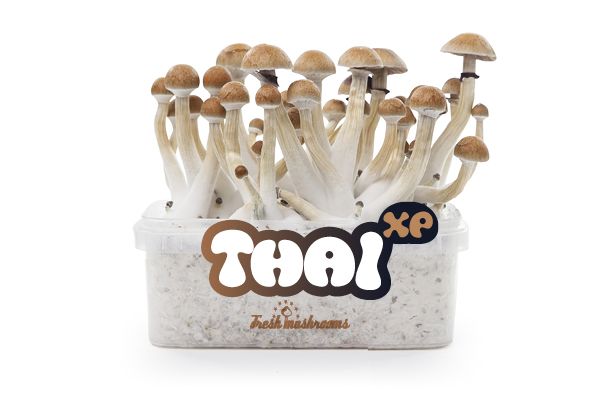 Dutch-Smart · NL
Thai - FreshMushrooms Magic Mushroom Grow Kit
€39.50
Dutch-Smart · NL
Thai - FreshMushrooms Magic Mushroom Grow Kit
€39.50
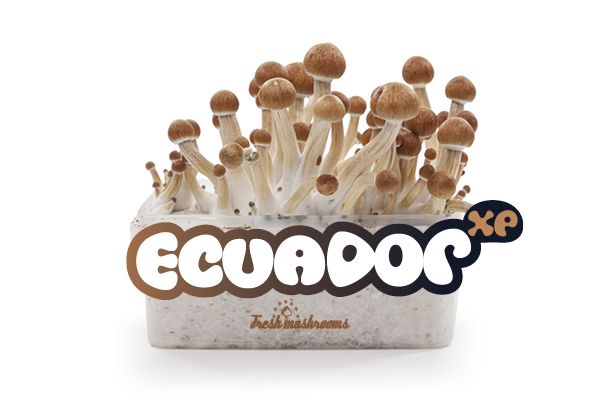 Dutch-Smart · NL
Ecuador - FreshMushrooms Magic Mushroom Grow Kit
€39.50
Dutch-Smart · NL
Ecuador - FreshMushrooms Magic Mushroom Grow Kit
€39.50
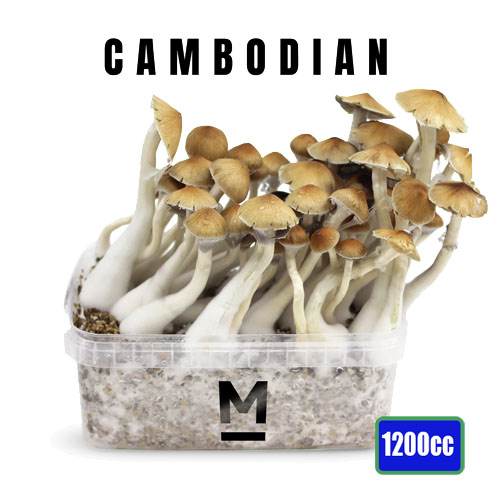 Dutch-Smart · NL
Cambodian - 1200cc Mushroom Grow Kit
€33.95
Dutch-Smart · NL
Cambodian - 1200cc Mushroom Grow Kit
€33.95
These products are for adults only. The Trimbos Institute's drug information covers the risks of psilocybin mushrooms.